ISSUES


No one seems to object to the transcriptions and posting of AK’s comments which are at www.krausenotes.blogspot.com. I’m putting comments and analysis on a separate blog, this one, so that people who don’t want to read such things don’t have to. This blog is set to accept anonymous comments, but I read them all and won’t tolerate flame wars. None have started.


Some of the most interesting and useful feedback on this material is coming in emails, some shared and others not shared, which I don’t want to post with names attached unless I have permission. I’m just going ahead to name the people AK named in her notes -- it’s been half a century since then, after all. Indeed, some of the email comments are arriving from people in that time period as well and those of us who know each other can probably guess who said what.


In good “discussion” mode, I’ll try to separate the issues from the people.


1. It is most moving that after fifty years the memory of personal relationships with AK have the status of love affairs, magical relationships that have inspired people for decades. They do NOT want that interfered with. Who would?


2. Likewise, there were a few people deeply wounded by past misunderstanding and schism and they, too, still hurt. To some this might be a reason to shut down, but to me it’s a reason to continue.


3. One opinion is that AK’s teaching methods are obsolete now. Students will no longer tolerate the confrontive and sometimes invasive tactics she used then. Indeed, some people wouldn’t accept them then, but they quietly went elsewhere. Is it a loss or a gain to give up the auteur model of teaching? Stanislavki was, after all, a Russian like the famously dictatorial ballet masters.


4. Is it true that academic theatre is nothing like professional theatre? You can still be tough on professional actors? (If Equity allows it.)


5. Some feel that theatre is totally different now. Whatever was important then is NOT important now. Or, to the contrary, theatre, esp. repertory theatre, is entering a renaissance that is vital and thriving across the country with new companies still being founded.


6. AK’s life trajectory is not really understandable without considering the time periods, the place, the administrators, sexism, and so on. No different from understanding a character in a play. (I confess -- this is my opinion.) All this happened before the Derrida Deconstruction craze, but we understand that, don’t we?


Mary Strachan Scriver

(Prairie Mary_


Thursday, January 9, 2014

EAGLES MERE, PENNSYLVANIA


Eagles Mere, PA, is a little resort town in the "Endless Mountains” which are part of the Appalachian chain and near the Catskills.  I spent a summer there (1960) as costumer for the resident repertory theatre, which meant I was soon so pressured and exhausted that I hardly knew what was going on around me, much less finding it a magical place to relax! Nevertheless, for many people it was something like the movie “Dirty Dancing,” but we were hardly operating on that scale and didn’t worry about being oppressed because we were so filled with fervor, dedication to the theatre, and high hopes for the future.


The old rooming house where we lived was pretty minimal with plumbing that made strange noises and the only cooking stove an ancient wood range.  Next door was the church above where a string quartet practiced during the week and church services included a lot of singing.  I couldn’t hear the sermons, but our cook for the second half of the summer was an evangelical Christian who told Bible stories on the porch just out my window.  The mostly Jewish actors listened politely.  I went home with her at the end of the summer, since I was penniless, and canned her tomato crop for a week of room and board.  I can’t remember how I got back to Chicago.  She lived near Gettysburg, the battlefield, and I have vivid memories of that broad field and a woodchuck I chased across it.

The Sweet Shop on the other side of the boarding house.

The cook for the first half of the summer was a small alcoholic black woman who could not manage the woodstove.  In fact, she was barely managing her life at all.  Some of the more devilish among us set up a doppler effect railroad simulation in the hallway and turned it on full-blast when she came staggering home from some place only she knew existed.  The next day she left forever, which was how we got the Sunday School lady.  For a few days we had no cook and survived on the resourceful skills of Jerry Zeismer who said,  “I’ll make a pot of chili that will last us a week -- trust me.”  He was quite right -- it was so hot that a few bites were enough to drive everyone with the resources over to the Sweet Shop.   (Jerry has been a major success in Hollywood.)

Street shoot: l.to r.  Jerry Zeismer, Stu Hagmann, Maria Moriates, Katina now married to Austin Pendleton.

Normally I wasn’t around the actual playhouse very much.  It was a converted barn at the edge of a swamp and the stage was small enough that one had to cross by going outside the building, where one had to be careful of footing.  I don’t remember mosquitoes much so there must have been insecticide fogging going on, or maybe there were simply enough bats to control the problem.  Stage lighting confused them, so occasionally one dropped onto the stage or the actors.
A red eft

The distance between the boarding house and the playhouse was a mile or so and few of us had vehicles, so I often carried costumes over via the path along the lake, which was a pleasure except when it was dark because of the many trip roots.  The surrounding woods were full of paths but I don’t remember seeing deer -- just tracks.  One memorable moment was spotting a red eft, a tiny scarlet salamander.  Another was being pursued by an elderly gentleman slashing at me with his cane and accusing me of being up to something immoral!  I left too soon to figure out who he thought I was.  

On another day Laird Williamson and I went bushwhacking, nearly losing ourselves in the beautiful but over-thick azaleas, but finally reaching this spectacular gorge, which is sometimes even compared to the Grand Canyon.  The summer I was there it rained so much and everything was so damp that a nice crop of mushrooms raised itself in my best Papagallo pumps.  The tallest ‘shroom was about five inches.


Lucy and AK went out on the lake on Sunday afternoons, Lucy rowing and AK scribbling.  The rest of us mostly slept -- together or apart -- whenever we weren’t onstage one way or another.  But once I rose to investigate strange kitchen noises in the middle of the night and found a couple of drenched actors pinning their pocket contents and what clothing they could spare to the lines strung over the woodstove and trying to stir up a fire with very little success.  There was no other heat in the place.  The actors had a strong sense of order: dollar bills pinned up in order of denomination and so on.  But a weak sense of boatsmanship: they had pushed off in the night in an unsound rowboat which luckily sank close enough to shore to wade back.

There was a memorable late evening visit from AK in her nightgown with a shawl thrown over it and her hair spread over her shoulders.  She’d been obsessing over something about the play in rehearsal and had come over to roust some actors for experiments and information.

Lucy and I wrestled with the compost, which was more like soup.  Both of us had only a foggy notion of what ought to happen, but nothing was digesting no matter how much we stirred.  Likewise, “plastic steel” would not heal the woodstove in spite of the optimistic copy on the tube.  At least we were partners in failure.

The sign shop, where Laird created beautiful silk-screened posters on cardboard, had originally been the ice house and was sunk into a hillside so it was possible to walk onto the flat roof, a perfect place for sunbathing, but we were forbidden to go there because traffic made the roof leak.


When I was so exhausted that there was no possibility of falling asleep, I would walk over in the night to the riding academy where there was a team of big farm horses who pulled hay rides in summer and sleigh rides in winter.  Tied into their stalls and busy munching hay from their feed boxes, they didn’t mind if I climbed onto their backs and napped for a while, rocked when they shifted their weight.  It was enough physical reassurance and comfort to get me through the season.  I have always been grateful for the comfort of horses.

TOM FORAL


Tom Foral, 2001

As an illustration that Northwestern University preparation for acting and other dimensions of the theatre arts can support a career in several arts, I submit the example of Tom Foral, who has been a carrier of spears in the background of Shakespearean drama, but also a set designer, a portraitist, a bricoleur (collage), and a creator of "beefcake" ranging from the semi-realistic to the satirical.  After ten years on Broadway in various capacities, he and his spouse, Joey, whose career was in the musical theatre, enjoy various locations as well as keeping a pied a terre in Manhattan.  Here is a publicity sheet from a recent successful event.


Tom's most recent stage role was as the Stage Manager in "Our Town."

Tom in the center.


The following transcriptions of notes to Tom from Alvina Krause show how much she was an entrepreneur and impresario (impresaria?) as well as an acting teacher and director.  Starting from very limited resources and proceeding by hook and crook as well as the passion of her students, which allowed her to make outrageous demands on them, she and Lucy managed to keep the dream of repertory theatre alive in a little resort town west of the Poconos from 1945 to 1965 where people came to escape the heat before air conditioning.  There was and is also an active winter-sports scene involving ice-tobogganing, but we were back at Northwestern then.
_______________

Written into a booklet originally meant to be a journal notebook :

Tom --

My “super-jet” is an hour and a half late so here I am bored to desperation in the Pittsburgh airport.

So you are Equity/Sc [?]  Are we going to bill you as Foral Thomas this summer?  I am not wishing that you will not get the big chance, but we would like to see you at E.M.  Several of your E.M. fans are asking about you.  And I am wondering again whether you could design “Ethan Frome” for our stage.  “Gideon” is on the schedule.  Want to play God?  I am not sure that “Oh Dad, Poor Dad” will be available, but a lot of people are urging me to do it.  Do you know “Idiot’s Delight”?   It is tempting me; would have to be done in period: 1930’s.  What Shakespeare?  I know not!  What Shaw?  Chris has cast “Back to Methuselah” but I am still afraid of it.  

No musical picked.  Do you know “Boys from Syracuse”?  Worth reviving?  I don’t know.  “Camelot” is not available.  Jerry Freedmansuggested “Lorenzo”; says bad directing killed it on N.Y.

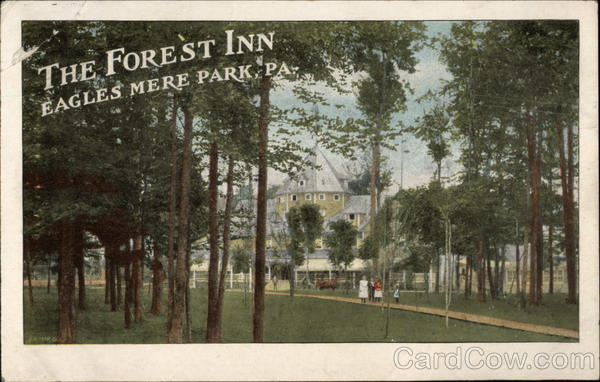
Forest Inn has just been sold.  We do not know what it will mean to us.  Owners are two Philadelphia men: Way and Benvegna or something of the sort.  The “corporation” went $9,000 into the red last year.


These huge resort inns were the source of the Eagles Mere audiences.  There were five of them.

We were tempted to come to see you at McCarter, but Lucy did not have her car and we procrastinated too long.

At NU things have reached a point beyond endurance.  If Fortune does not materialize, I think I shall retire to my rose garden.

Carry your spears with style!

Love,
A.K.

P.S.  Surprised to get a postscript?  Well -- it’s getting important to know whether you will be coming to E.M. because:  Van meter will direct "Antony and Cleopatra" for me if Tom Foral is available to play Antony.  Of course, he also stipulated that you would have to be letter-perfect in the role before coming to E.M. so that we could start work on it early.  Well?

A.K.

________________


If you play Father, Antony and The Lord, I guess you should not play Ethan as I had originally planned -- do you want to direct Ethan? Van Meter says:  I hope Foral will design “Antony and C” -- yes?  And “Ethan” and . . .  I’m still in a fog about a couple of shows.  Can Frank not stay for "Antony and C"  Aug 7,8,9,10?

Love,
A.K.
__________________

Unit set again this summer?  Two unit sets?  Have one promising Sophomore interested in design.  Has done some promising work.  Use him?  If you’re with "Life with Father "can you play Father without pre-season rehearsal?  Guest-star-artist ready to go?  Can’t think of anyone else who could so directly, authoritatively speak to God!  Frank wants a cement floor to build flats on.

Fortune be with us!


A.K.
__________________

Some samples of Foral work, far from complete, but to give you an idea.  www.tomforal.com and www.thomasforal.com.


Tuesday, January 7, 2014

from EDWARDIAN to AQUARIAN


Starting to accumulate information about someone on a blog (or in this case two blogs) is not the same thing as writing a book about them.  It’s easy to say,  “write a book” which people envision as one waving a magic wand so “poof” it appears on a shelf somewhere.  One needs to justify writing a biography.  In fact, a thorough search of places and documents means an investment of considerable money and travel.


These are scans of scans rather than transferred code, so they are a little vague which AK was NOT!  
They come from Tom Foral and remind us of AK's favorite teaching story which was about an actress who could summon the sense memory of a rose so vividly that the audience could tell what color the rose was.  The photos were taken at the Bloomsburg home of AK and Lucy McCammon.

Alvina Krause (January 28, 1893 – December 31, 1981) was an acting professor at Northwestern University who taught her own version of the famous “Method,” which used sense memories from the lives of the actors to evoke realistic acting.  That’s not all there is to acting,  First one has to learn lines, follow blocking, make sure to cheat towards the audience, project to the back wall of the auditorium, “land” lines and all manner of other technical things that need to become unconscious, intuitive and second nature.  Beyond that, an eerie and sometimes frightening magic seizes the actor and audience in a trance of belief.

Krause was considered a “star maker” and that’s the way Northwestern University presents her, with a long list of her “stars.”  She herself repeatedly emphasized that to come to her expecting to be made a star was folly.  She told a story about a mother who brought her son, demanding that Krause make him famous.  The silly woman was turned away.  But there were plenty of sons (and daughters) who came on their own, begging to be split open, to get at the heart of their passion or talent or whatever it was inside them that drove them towards this specific art form, a near-sacred vocation.  

Google can lead one in and out of many flammable and burnt buildings.  I’ve read what dead men wrote, secrets and old black mail, and -- if you know how to read between lines written in invisible ink or decipher codes from past eras -- a lot of nonsense and laughable convictions.  For former students none of that has the compelling power of Krause’s handwriting in one of the blue exam books where she scribbled her directing notes.  One glimpse and we’re back in some moment, skewered like an insect on a pin, when insight struck us between the eyes.  Oh!  THAT was it!

A handwriting sample and clip from Foral.  
She liked a small format as is this page which was evidently from a journal or diary notebook.

I’ve been posting all this on two blogs -- actually there are three if you count a fragment that I abandoned early.  They arewww.krausenotes.blogspot.com  for those handwritten bits. www.thesilvercomb.blogspot.com for writing about Krause, much of it mine, I confess, but also notes and articles from others.  The fragment is at http://theplayhouseateaglesmere.blogspot.com  David Downs, a student and working partner of Krause, has also posted on a blog atwww.DavidGoingOn.blogspot.com.   David Press’ thesis about Krause’s work is available at the usual Ph.D. thesis source, University Microfilms in Ann Arbor, MI, and Krause’s own Master’s thesis is available through the Northwestern Archives.  I put notes from them on "The Silver Comb" blog.  She did not receive a Ph.D.

People have wondered why Krause was abruptly and forcibly retired from the School of Speech and why no one has ever explained her work in the way that other famous Method teachers have been analyzed.  What is it that made her so effective and meaningful for so many people -- quite apart from any “star system” (an idea that made her snort) and even apart from the theatre, since many of us didn't become actors or directors.  Underlying the politics of the School of Speech and the actions of the university are the dynamics of a great sea-change in the nature of theatre and another deep shift in the assumptions of the larger culture.  The theatre went from realism to surrealism (possibly because of film or possibly because of a world gone absurd) and the culture went from prissy to libertine.

Krause’s lifespan nearly coincided with the 20th century.  She began her career as a stalwart orator, Chautauqua-style, declaiming great literature for her rural Midwest small town.  Her first teaching job was in Seaside, OR, where she was the gym teacher.  Then began a slow progression up through a small college, then Garrett seminary, and to Northwestern University, by that time under the protection of Dean Dennis, a great favorite on the Chatauqua circuit.  She was technically a teacher of “interpretation” until almost the end of her teaching career, though by then she was staging plays year-round.

The materials on the blogs I shepherd are mostly from the last few years at Northwestern as they transitioned through Eaglesmere, PA to the Alvina Krause Theatre in Bloomsburg, PA, which is another source of information about Krause and her work. (http://www.bte.org) Over the years people tried to question her about her theories and methods, but she was evasive.  There were several interrelated reasons for this.  One was that she really didn’t have conscious theories and repeatedly protested that she just KNEW, she FELT it.  Questions felt like challenges.  In an academic setting she justified her presence in a university instead of a conservatory by emphasizing the crucial importance of history and culture, how it affected a character, how it had shaped the playwright.  Her conviction was that actors could never learn too much.

The Eagles Mere Playhouse in late days.
Photo from Foral.  He is with his mom and sister.

Some students were exploring religion, as is natural at this stage in life, and grappling with some very muscular serpents.  Questions about the core aspects of life were too much for some and there were accusations that her methods were too rough, damaging and belittling.  She was certainly no mollycoddler but the students came begging to be broken open.  It was risky in the way that true creation and art must be to have real value.  Not a pretty pursuit, an entertainment, but a gut-wrenching transformative experience.

Of course sex was part of it.  In those days girls at NU had to sign in and out after dark with a ten o'clock curfew, and the housemother came at midnight to make surprise bed-checks.  If a girl married or became pregnant, no matter the sequence, she had to leave.  A man caught in a homosexual act meant jail, a felony.  Krause was in what is sometimes called a “Boston marriage,” two women in household partnership, a matter of intimacy and trust.  Lucy did not come to campus, but in the summer and on long breaks the two women were together, often traveling.  No one quite believed in lesbian relationships anyway.  But at the other extreme some Method directors and actors at that time felt they had to break barriers and taboos on stage.  One was cautious about being associated with them.

School of Speech professors, who included high school dramatics coaches, speech pathologists, hearing experts, designers of stage lighting, costumers, and other stage technicians, were very assorted in style.  The debate and public speaking people traveled, competed, were half-politicians -- they were the randy ones with opportunities.  Interpretation?  I wouldn’t know.  An undercurrent of lust is always in the hard wiring of a university -- let alone in the euphoric or tortured atmosphere of theatre companies -- no doubt there was worry that it could burst into a conflagration that would consume alumni donations.

Today the School of Speech is gone, replaced by the five divisions of Communication Arts:  Communication Sciences and DisordersCommunication Studies;  Radio, Television and FilmPerformance StudiesTheatre (includes Dance)  Debate and interpretation have disappeared, along with the teaching of high school dramatics which was my actual major.

The division called “Rhetoric and Public Culture” would hardly stutter if presented with problems of sexuality, gender, and all that ticklish stuff.  So why leave that hidden social aspect of the Fifties/Sixties School of Speech unstudied?  What’s still in the closet anyway?

Former students.  Some “out”, some “bi,” some hidden, protecting reputations that control their employment, some just feeling like the Krause years were so intense and so personal that they don’t want them talked about.  And there are, bless ‘em, still people who had no consciousness of any of this.  We’re old now, our partners may be sick or dead, and life is tough enough without questioning what happened in one’s youth.  Some write their own books and include Krause as part of their story.

Former student Joy Zinoman, founder and director of The Studio Theatre, has already spoken of  Krause as a "fierce lesbian" and has been a living example of Krause's other and mostly unremarked major contribution, which is her belief in local repertory theatre like both EaglesMere and Bloomsburg Theatre Ensemble.

Maybe there’s no place or justification for a book about Alvina Krause.  Maybe it ought to be a play instead.  David Downs took a run at it.  Anyone else?  Or should we just let Alvina Krause fade into the past?  (I do not know who wrote the Wikipedia entry.)

Monday, October 14, 2013

A REVEALING CONTRAST


Karen Black was in my cohort at Northwestern University School of Speech.  Not for the whole time, because she disappeared.  At the time I had no idea why -- some people may have known.  Some of us assumed it was because Alvina Krause didn’t like her.  Maybe AK didn’t like Robert Benedetti, her roommate at the time, either, but he was a big smart guy no one pushed around and he found a way around AK.  He was just the kind of man she always tried to press into heroic parts, but he resisted and some thought that was why she resisted Karen Black.

Sometimes you can find more insight into someone through their dislikes than their likes.  There’s a great deal of information about Karen out there now because of her recent death, and that includes the memorial in Hollywood which can be seen in compilation at this link: http://vimeo.com/75189301   The best parts of the video are the beginning, which is a montage of clips from ALL her movies (quite different from each other) and the end, which is a montage of still photos from birth to death, some of them shocking and most of them seductive.  

I was fascinated to see Karen’s sister, who looks much like her.  You get a pretty good idea of a well-loved extravagant sweet non-intellectual child-woman who loved sex, cats, and -- well, long walks on country roads, sunsets, kittens, and . . . other corny stuff.  She could sing and compose.  She wrote plays.  She also very shrewdly played scary roles in horror films and was often funny.  There’s a good deal of intelligence behind that, which would exasperate some people.  It’s hard to know how much she was watching herself.

My basic theory is that AK didn’t like Karen because Karen scared her:  she was a person who had abandoned all caution, while AK had staked her life on prudence and discretion in relationships, academic life, and  -- well, she wasn’t always cautious when she taught acting.  In some ways she was as instinctive and as able to pick up on undertow and subtext as KB was, and everyone says KB was an ace at it.  But KB always supported and appreciated those inner springs, while AK wanted to analyze and shape them, which is what she understood to be the task of the actor, especially a traditional realistic proscenium stage actor trained to address tragedy and heroism.  Big ideas, subtly expressed.


Personally, AK had to have respectability because that was her safety.  She was a small, ambitious woman who grew up the youngest in a big family on a Mid-West farm and survived with a sonorous voice, a vigorous erect body, and the singlemindedness of a sword.  If she had been labeled a lesbian, her career would have ended.  She never risked acting professionally.   It would be going too far to say that she had a German northern temperament while Karen Black had a Mediterranean Jewish soul.  But not much.

Karen was a voluptuous, generously sensuous, man-loving person whose salvation was innocence.  She didn’t cling or demand or try to prove anything.  So far the only complaint I’ve seen her make is that she was treated badly on the set of “Day of the Locust.”  It’s a bitter, punishing piece of madness and somehow that got attached to her.

The career of Benedetti was quite different.  I haven’t had anything to do with either of them until recently and then only read Benedetti’s books, watched his movies, emailed a bit.  KB is on Twitter. The two lives went in quite different directions and yet stayed together in friendship, which was always KB’s policy.  Karen’s husband released the story of why she suddenly disappeared from our cohort and why she and Bene stayed such close friends: they conceived a child together at Northwestern.  http://karenblackactress.blogspot.com  Both biological parents have embraced this woman, who is an artist with family.
It’s hard to imagine either one of her bio-parents considering abortion and in those days it was probably illegal if not life-threatening.  The stigma, lack of social support, and theatre dreams of both youngsters made raising a child alone impossible.  The two families were local, proud, and who knows how they felt?  Or whether they knew.   Adoption in those days was rigidly private -- the government SWORE it would be forever hidden information.  

There’s no such thing.  

The State of Illinois has opened their adoption records so that the child made right under our noses -- I suppose some of us might have known, including AK -- found her bioparents, Karen and Bene.  No doubt results are mixed and such an enterprise is not always well-advised, but in this case all three had known about each other and tried to find each other.  It turned out just fine.  The Benedetti family, generous and warm Italians that they are, pulled her in -- along with her children and grandchildren.  She and Karen painted together towards the end and she helped with Karen’s care.  KB refused morphine as much as she could bear so as to absorb this happiness.

Benedetti has a strong social conscience with a special concern for African Americans in the South.  Karen was more of a “mom” who took care of everyone, regardless of who they were.  Whether the social constriction the two shared as the price of love was part of creating their ethic or whether their natural character saw them through the ordeal, I see it as a triumph in the end.  Integrity.

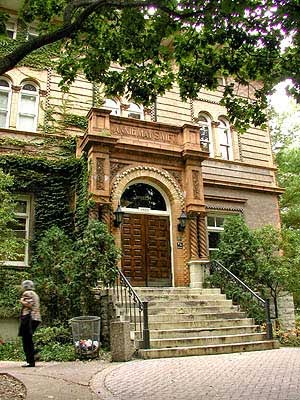
I suspect that when KB looked at AK, she saw a path she could never take and wouldn’t want to.  All that caution, all that self-discipline and self-denial would have been impossible for her.  Conversely, I suspect that when AK looked at KB she saw a life she could never lead: all restraints dropped, all goals surrendered to fate and hard work.  I sat in the back of Annie May Swift auditorium, watching, and was more like AK than KB, but appreciated KB anyway.  Do we have to make choices? 


In some ways, AK’s choice betrayed her, because her fame and the emotional pressure she put on her students to break them out of their shells scared the corporate managers of the university apparatus so that they eased her out a little early.  She was wise to have the backup of Eagles Mere and then Bloomsberg where all the calls were her own and a certain amount of abandonment was part of the regime, so long as you got to rehearsals on time.  She and Lucy spent wonderful summer Sundays out in a little boat (it had to have been pea green) with big hats against sunburn. AK scribbled on a notepad, thinking furiously about the playwrights’ knots to untie for an increasingly savvy audience.  All the while Lucy in her faithful, rather stout way, rowed quietly along on the mirroring water.  KB’s idea of such intimacy might have meant stripping and plunging in, which would have ended local affection.  Except for the stalwarts who would heroically swim out to save her.

A writer’s game -- watching, making word pictures, passing judgment on people many have loved -- is a risky business.  Maybe more immoral that sharing physical pleasure when the opportunity arises.  Maybe more immoral than pressing youngsters against their own psychic thorns in hopes of awakening them.

In a way AK probably had something to do with KB’s development but I don’t know whether anyone ever asked either of them.  Sometimes it’s the people who wave us on who teach us most.  Like, not to waste our time on a fate that’s not ours.  Karen didn’t need Eagles Mere -- she was a natural film personality, not a stage presence, though she did well in New York.  It was the California climate that let her bloom, and we are grateful.


Tuesday, August 20, 2013

EAGLES MERE, PA

THE LODGE
Dining room was on the left through the door. 
That's Bill and Kate (Emery) Pogue at the steps.

Here are Kate and Bill again standing the footprint left when the Playhouse was torn down and trucked away.  I don't know whether a photo record was kept.  There's one photo of the exterior that shows up on the Internet.  It features an awning on the front.  Where do the bats roost now?  Or are there still bats?  Do the ghosts of passionate actors drift through on moonlit nights?


Friday, August 16, 2013

KAREN BLACK AND AK


Articles about Karen Black are accumulating on the Internet and probably will keep doing so for a long time.  She definitely had an impact on the culture, both the “low” and the “high.”  And I’m sure she was pretty vivid in the lives of those around her as well.  I think of the Flaubert quote I keep at the top of my computer:  “Be regular and orderly in your life so that you may be violent and original in your work.”  

Among the small cohort that has gotten back in touch via email since the years 1957 to 1961, the reaction to Karen has been helpful in understanding the role and contribution of the legendary Alvina Krause -- not because Karen was a protegée who achieved the stardom some were seeking, but because AK wanted nothing to do with her!  Was even mean to her!  So why?  (That’s what AK would ask, if she were being fair.)


Really effective teachers are like heart surgeons: intimate, incendiary, and relentless.  For some they are life-saving kindlers -- for others, they start conflagrations of identity that may need professional help to recover.  I can think of two -- maybe three -- who landed in hospitals, “decompensated” in the jargon of our times.  The kind of teacher who does incredible things is creating an instrument for acting -- not a star.  What makes such a teacher so dangerous is not so much their methods or intentions, but the hopes that the students bring:  “Oh, set me on fire, Miss Krause!  Make me burn with a fine clean flame!”  In other words, they handed their talent over to someone else instead of exploring it themselves.  She knew this.  She tried to tell them this.  Sometimes she went too far.  It is a kind of work that can be painful.


But she could not resist taking on a few of the riskier ones.  Karen was not one of “chosen”, but Paula Ragusa/Prentiss was.  Somehow, mostly because she had a prince of a partner (Dick Benjamin), Paula survived.  Her sister did not, but I didn’t know Ann.  


Karen also had a strong partner then:  Robert Benedetti (Bene to friends) http://robertbenedetti.com/Biography.htm , a formidable polymath whom AK tried to tempt into her more ambitious productions (“Oedipus,” “Lear”) with no success.  Both Karen and Bene withdrew from the AK camp.  They thought for themselves, found their own way with spectacular results.  Unconventional.

So that’s one circle of this complex.  There might be other people in it.  I won’t name names for the other circles.  There were individuals (writers, observers) who belonged to no group.  Given that most of us were not yet 21 and given the slow awakening in the larger culture, it was not too surprising that there were groups based on sexuality, including homosexuality.  Perhaps it is more surprising that the gay men shared with “sisters,” who mostly just hadn’t decided.  (I was saving myself for Montana cowboys.)  Those gays didn’t really know what it meant yet.

Another group was a professional set of people whose families were Broadway actors but who for some reason didn’t choose the Stella Adler/Lee Strasberg classes, so they came looking for AK, who was considered an equally good Method acting teacher.  This group wasn’t looking at Hollywood.  They stayed on Broadway and in the touring companies and summer repertories that spin off from Broadway.  Still acting today.

Those with an academic perspective split into two groups:  those who were Ph.D. analytical people who could get into trouble if they challenged AK.  Of course, challenge is at the heart of a Ph.D. candidate -- questioning is the name of the game.  But AK never got a doctorate and never absorbed the ethic.  To her it was defiance.  Others, who aligned themselves with her more loyally, were sometimes drawn into a kind of family relationship, as though they were the sorts of sons who would become vicars in the estate’s parish.

People who were invited to Eagles Mere, AK’s repertory company in a tiny Pennsylvania resort town on a pristine lake, were another group, overlapping the previous.  Working under the influence of that intoxicating drug No-Sleep, we did what we considered to be amazing work while AK used every trick she had and rejoiced when they were effective.  Certainly we learned our limits, which usually turned out to be a lot farther out there than we might have guessed -- even for me, who was only a costumer.


Like everything else in the great cultural sea-change that roared through the world in the Sixties and Seventies, theatre transformed, veering into absurdism, dada, spectacle, and shock-performing in the actual laps of the audience, maybe sans costumes.  At the same time on television the series were creating the image of a strange Stepford happy-families way of life that has since boomeranged into vampires and zombies.  All the while the actual world was far more like “Five Easy Pieces” and “Easy Rider.  If we were lucky.

The “Method” was created in Edwardian times for an Edwardian kind of theatre: prosceniums, realism, mimesis of gentry -- very “Downton Abbey” with an echo of Shakespeare and Greek theatre, which were all the rage in the Fifties when I went to high school.  Well, they don’t wear out, do they?  I loved the movie “Being Julia,” which hit all the stops in the kind of work AK understood: an elocution base, a comedy skill, and a thread of darkness.  No need to get either nude or screwed.  At least not onstage.  But if Karen Black were persuaded it was necessary, she would.  With style.  So would Paula -- if she were in the mood.  Both women were a helluva lot more intelligent than they seemed.  

This little cohort remembers a lot of indelible moments, mostly hilarious.  I would have loved to have seen Karen play a scene with Paula.  Both women turned out to be effective in front of a camera.  Method acting is really powerful when handled skillfully in close-up acting where the flicker of an eyelash expresses a major realization.  AK never addressed film acting, but her Method was effective anyway because it had a sound base. 

I think it was important to AK to keep theatre at a genteel cultural level, the sort of respect one once gave to a well-traveled Chautauqua speaker like Dean Dennis who recruited her and supported her career.  She was afraid of side shows, burlesque, carnie downscale stuff, because she needed the respectability -- the assumption of Christianity -- in the first place (she was, after all, from a small Midwestern town) to distinguish this acting from the kind that was a euphemism for prostitution.  At the same time, her roots were in progressivism, aspiration to the highest level, idealism.  In the Fifties film was in love with Bergman, Russian realism, and French Cinema Veritée -- all of them still hanging onto the aftermath of war.  Some of the students loved it dearly, but though she never said so, AK was not one to appreciate the gutter.  Or even nihilism.   Oh, maybe Chekhov.  She wanted to be serious and despised Helen Hayes for her sentimentality.  And girly curls.

Extraordinary people are generally more many-sided than monolithic, but no one can be all things to all others and much of life is a matter of finding one’s niche.  There’s really no NEED to see Karen Black as a protegée of AK or anyone else.  But those of us who knew both of them at NU have not forgotten either of them, one way or another.  They both knew how to seduce.  Far more than just sexually.

Thursday, July 25, 2013

NORTHWESTERN UNIVERSITY ARCHIVES


Kevin Leonard, prompted by David Downs, and fully supported by myself, is collecting and ordering the archive for Alvina Krause, the legendary acting professor at Northwestern University.   This is the University introduction:
___________________

This service was launched in July 2011 to capture and preserve historically significant web content generated by and relating to Northwestern University.  Your archived web site will be accessible via the NUA web site and will be searchable. Additional information on this initiative may be found at http://www.library.northwestern.edu/webarchives.

NUA will only capture and preserve publicly available materials and will never copy content that is password protected or requires registration or data entry. In addition, all preserved content will be embargoed for at least 30 days before being made public and will then be prominently labeled as an “archived copy for study and research” to avoid confusion with your live website. This process involves no special preparation of the website and is designed to have no negative effects on your web server’s performance. 

Please contact Benn Joseph or Kevin Leonard by phone (847-491-3136) or email (b-joseph@northwestern.edu or kbl767@northwestern.edu) should you have any questions or concerns about the Northwestern University Web Archives.  For more information about donating materials to the University Archives, please see http://www.library.northwestern.edu/libraries-collections/evanston-campus/university-archives/donating-materials

This is an excellent first step toward translating the mission of your University Archives into the digital age. Thank you for your time and consideration.
_________________

In case you are following this blog in order to study AK’s life or are actually on the campus in Evanston, there are materials at Deering Library that include paper and other real world materials.  Leonard and Downs want to collect as many as possible of the class notebooks in which AK replied to students’ account of their work.  These two blogs, www.krausenotes.blogspot.com and www.thesilvercomb.blogspot.com will be archived.

Which raises the question of who deposits what where.  Many AK students are famous and courted by major institutions.  Marshall Mason’s papers will go to the Lincoln Center for the Performing Arts.  Other are academics with close affiliations where they teach.  My cohort is crossing into our seventies, so we are actually having OUR students archive materials about US.  My own work is split among quite different fields so will be scattered.  

Some people or their executors don’t realize what importance some seemingly trivial materials might have for researchers.  Leonard tells me they often get inquiries by people writing histories of performance arts, crucial in the 20th century when camera acting was just coming to fruition and experimental theatre was taking hold even out on the street.  If there’s any question in your mind about it, contact Leonard for advice.  Not me!